The customer is at the centre of every company. Each team finds its questions answered by the same modules, on the same data, and can act on them in its own tools.
Corporate development and strategy
Which audiences to grow, which to defend, and where to invest next.
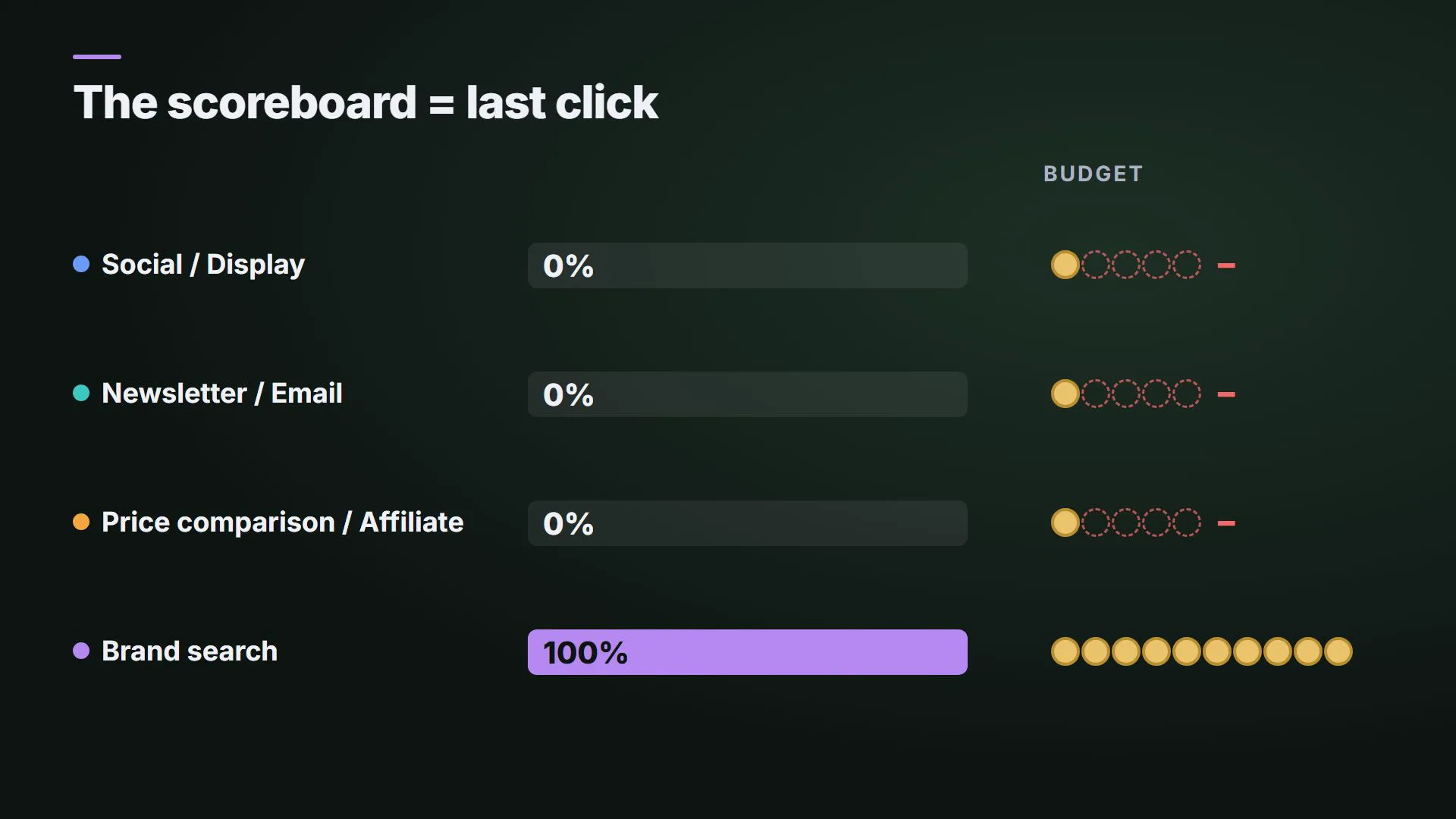
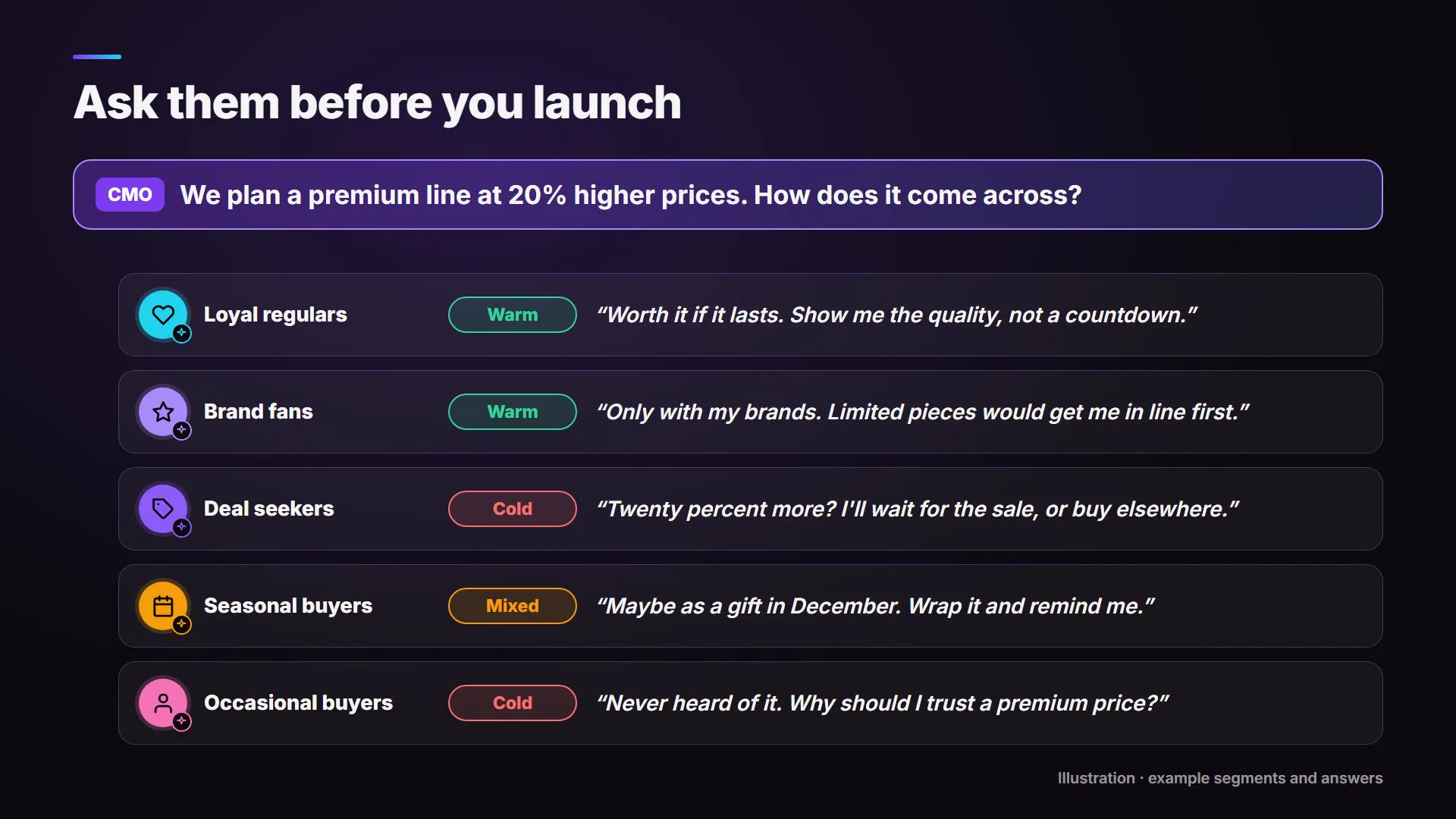
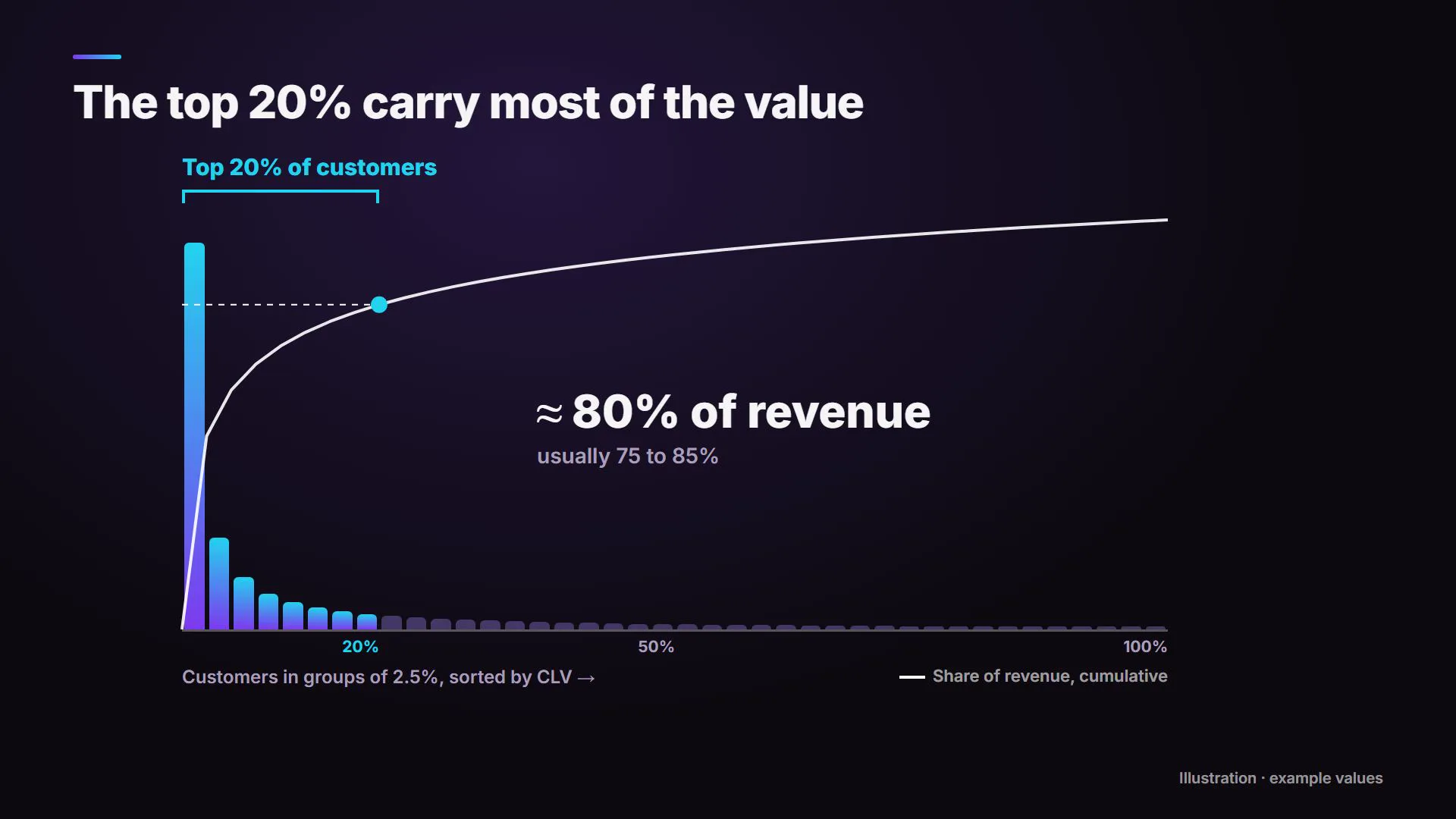
See three modules at work: in Agentic Customer Lifetime Value an AI agent acts on predicted value every day, and in Agentic Customer Segmentation every audience can be asked before a launch.
The expensive part of customer analytics is rarely the model. It is getting clean, connected customer data into one place. We build that once, in your cloud, and every module uses it, so the second module costs a fraction of the first.
Your data
Orders, customers, marketing contacts, campaign costs, returns and service contacts.
Modules
Lifetime value, audiences, churn, recommendations and channel contribution, on the same base.
AI agents
Agents that act on the results or answer your questions before you decide.
Every department's tools
CRM and newsletter, Google and Meta, shop, sales, service, purchasing and reporting.
Already running a data warehouse or a CDP? We build on it, not next to it.
How we work together
Start with one module, add the next on the same base
A fixed-fee assessment, a pilot on time and material with an estimate up front, then a monthly run fee. You never commit to more than the next step.
1 2 to 3 weeks
Assessment
We check your data, pick the module with the clearest payback and show first results on your own customers.
2 8 to 12 weeks
Pilot
The first module goes live for one business unit or audience, connected to at least one system that acts, with control groups from day one.
3 monthly
Run
Daily runs, model refreshes and new plays. The next module is added on the same foundation.
Trust and data
Your customer data stays yours
Runs in your cloud
AWS, Azure, GCP, Snowflake or Databricks: the pipeline runs where your data already is.
Pseudonymised
Pseudonymised identifiers; no raw personal data leaves your environment.
GDPR from the start
A data processing agreement under Art. 28 GDPR; consent and preference flags are respected in every decision.
Owned by you
Models, code, pipeline and documentation belong to you.
Analysing customer data to answer the questions every department has about customers: where they come from, what they are worth, which audiences they form, what they buy next and who is about to leave. Our Customer Analytics does not stop at the analysis: each module writes its results into the systems that act on them.
Which module should we start with?
Usually the one closest to a decision with money attached: marketing budget, retention or discounts. The assessment looks at your data and your priorities and ends with a clear recommendation.
Do we need every module?
No. Each module works on its own. They share the data foundation, so adding the next one costs a fraction of the first, and the results feed each other: channel contribution improves the lifetime value model, and lifetime value sharpens the audiences.
Which departments use it?
Every team that touches customers: strategy, marketing, sales, customer service, purchasing and range planning, finance. They share one view of the customer, each in its own tools.
What data do we need?
Orders with customer ID, date, amount and products; customer master data; marketing contacts and campaign costs. Margin, returns and service contacts make the results much better. Two years of history is ideal; the assessment shows what your data supports.
Does this work in B2B?
Yes. The customer is often an account with several contacts and a longer cycle, so the models weigh company data, product usage and sales activity more heavily, and the results go to sales as well as to marketing.
Where does our data go?
Nowhere outside your environment. The pipeline runs in your own cloud with pseudonymised identifiers, under a data processing agreement (Art. 28 GDPR). You own the models, the code and the data foundation.
How is it priced?
The assessment has a fixed fee. The pilot runs on time and material, because data preparation is often what takes most of the time and nobody can know how much before looking at the data; you get an estimate at the end of the assessment. Once live, there is a monthly fee.
Put the customer at the centre of every decision.
Thirty minutes on a call: tell us about your customers and the decisions your teams face, and we will tell you which module pays off first and what it needs from your data.
 Watch the 1-minute explainer